
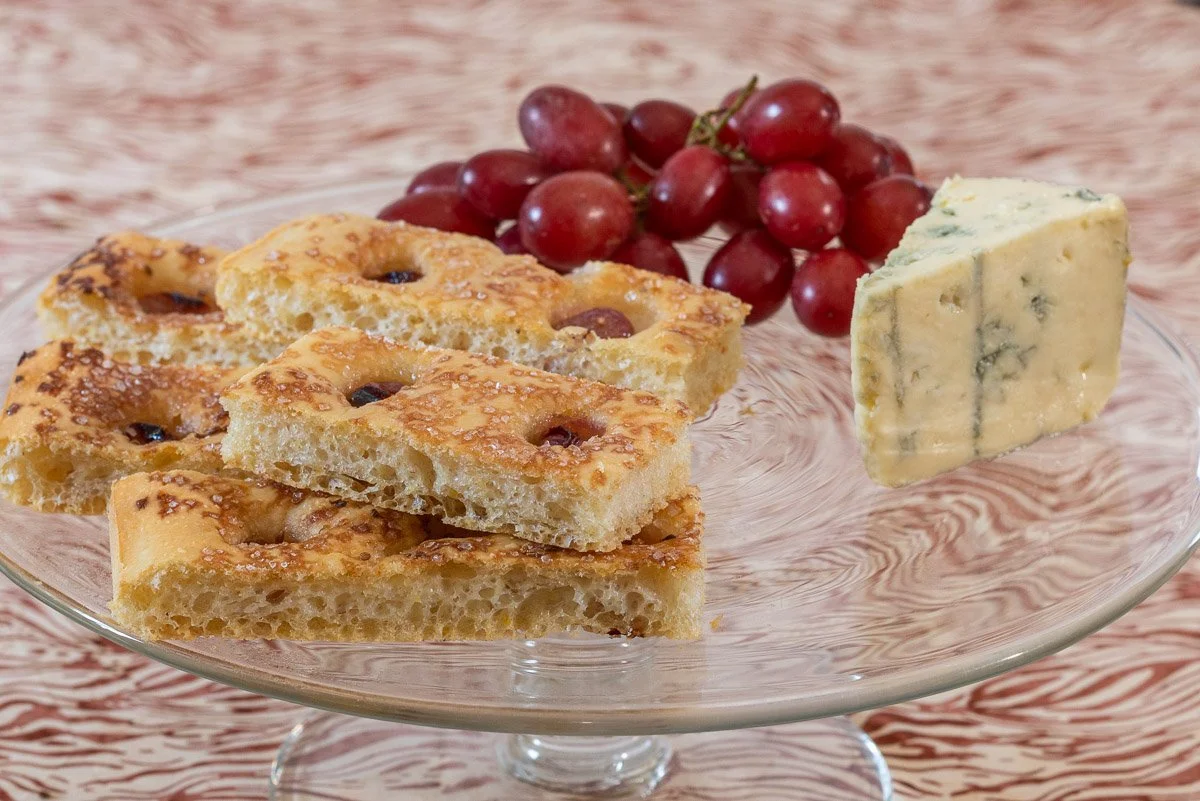
If this year’s California grape harvest isn’t the earliest on record, it’s close. In Napa Valley, where I live, the sparkling wine houses are full speed ahead, and even the still-wine producers are harvesting. Red table grapes are at their annual peak—juicy, crunchy and impossibly sweet. I picked up a bunch last week for a focaccia recipe I hadn’t made in years. Dusted with coarse sparkling sugar and aniseed (if you like), grape focaccia will be the star of your cheese board. I particularly enjoy it with fresh cheese—such as ricotta or fromage blanc (recipe below)—or a creamy blue cheese. Hope for leftovers: Warm grape focaccia with fresh-brewed coffee is the ultimate breakfast.
Red Grape Focaccia
Note that you need to start the focaccia one day ahead. From The Cheese Course by Janet Fletcher (Chronicle Books).
Focaccia sponge:
1 cup warm water (about 110ºF)
1 teaspoon active dry yeast
1 cup unbleached all-purpose flour
Focaccia dough:
Sponge (see above)
1/3 cup dry white wine
1/3 cup olive oil
2 teaspoons kosher salt
2 tablespoons cornmeal
2-3/4 cups unbleached all-purpose flour
2 tablespoons plus 2 teaspoons extra virgin olive oil
1/2 pound seedless red grapes, halved
3 tablespoons coarse sugar
1/2 teaspoon aniseed, optional
Make the focaccia sponge: Put the warm water in a medium bowl. Sprinkle yeast over the surface and let stand 2 minutes, then whisk with a fork until dissolved. Add the flour and stir with a wooden spoon until smooth. Cover and let stand at room temperature for 24 hours.
Make the focaccia dough: Put the sponge in a stand mixer with a paddle attachment. Add 1/2 cup water, wine, olive oil, salt and cornmeal and mix on low speed. With the mixer running, gradually add the flour. The dough will be very moist. Knead in the mixer for 5 minutes with the paddle. Scrape down the sides of the bowl and the paddle, cover with a plate or plastic wrap and let rise 1-1/2 hours.
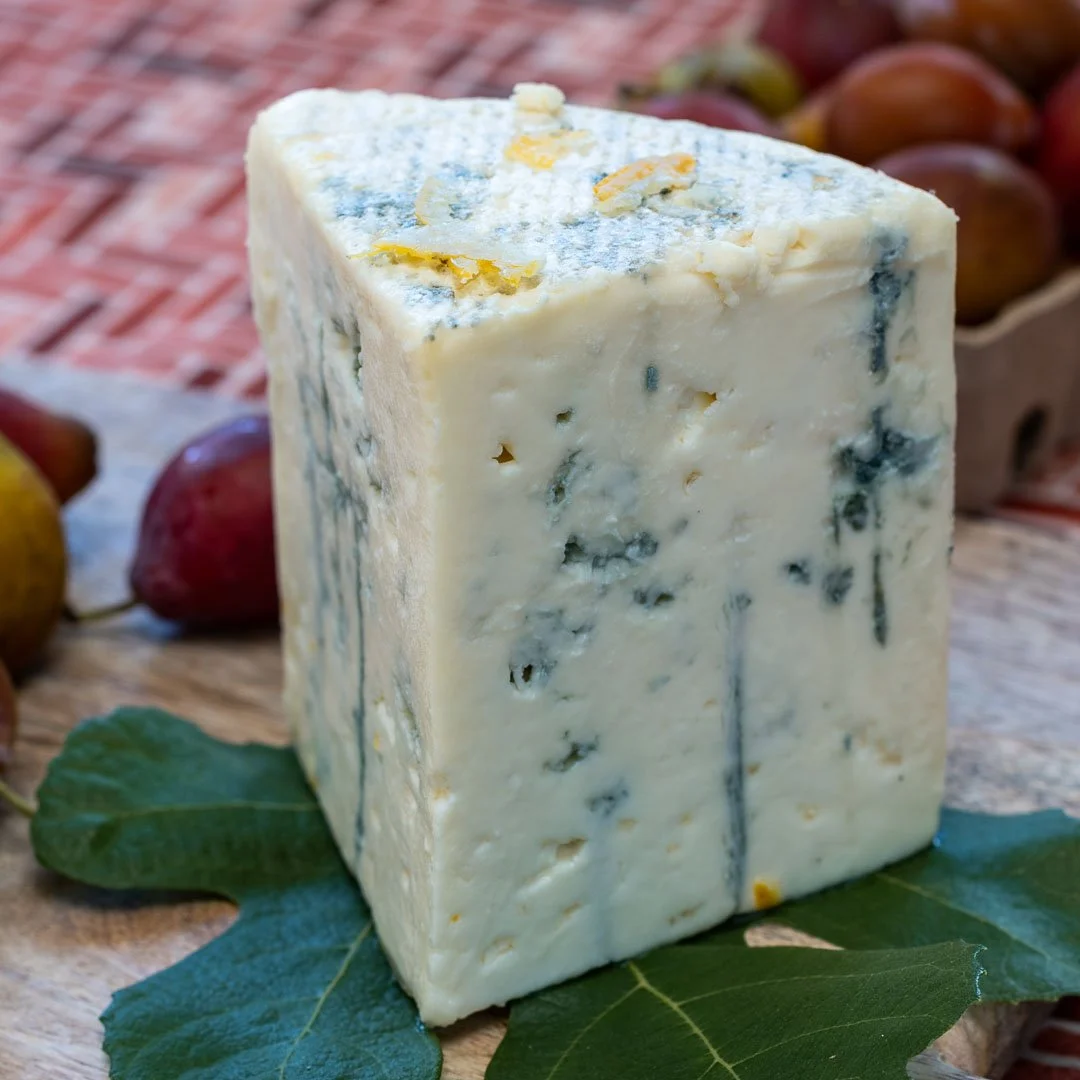
Pair red grape focaccia with Rogue Creamery’s new Bluzu, a creamy cow’s milk wheel infused with yuzu and sake.
Generously grease a 12- by 17-inch rimmed baking sheet with 2 teaspoons olive oil. Transfer the dough to the baking sheet and, with oiled fingers, pat and stretch it to cover the baking sheet. If the dough is elastic and wants to bounce back, let it rest for 5 minutes, then stretch again with oiled fingers. If it still refuses to cover the sheet completely, let rest again for 5 to 10 minutes, then stretch again. Cover with an inverted rimmed baking sheet and let rise until puffy, about 1-1/2 hours.
While the dough rises, position a rack in the center of the oven. Line the oven rack with baking tiles or a baking stone. Preheat the oven to 550°F or the highest setting for at least 45 minutes.
Brush the surface of the dough with 2 tablespoons olive oil. Top with the grapes, cut side down, pressing them gently into the dough. Sprinkle the surface evenly with the sugar and aniseed (if using), then dimple the dough with your oiled fingertips. Bake until browned and firm, about 15 minutes. Carefully slide an offset spatula under the dough to release it from the pan, then slide it onto a rack to cool.
Makes one 12- by 17-inch focaccia
Goat Fromage Blanc
With a purchased starter culture and storebought goat’s milk, you can make homemade fromage blanc in less than a day. Enjoy with red grape focaccia for breakfast or dessert or add minced shallots and herbs and serve with tomatoes, cucumbers and pita bread. Note that you will need an instant-read thermometer and cheesecloth. From The Cheese Course by Janet Fletcher (Chronicle Books).
1/2 gallon goat’s milk
1 package fromage blanc direct-set culture
Kosher or sea salt
In a saucepan, heat the milk over moderate heat to 170ºF, stirring occasionally. Immediately transfer the saucepan to an ice bath to cool the milk quickly to 72ºF. Remove the saucepan from the ice bath and stir in the culture. Cover and let stand at room temperature, preferably 72ºF., until the mixture sets into a solid, yogurtlike custard, 12 to15 hours or more.
Line a colander with a double thickness of cheesecloth. Gently ladle the curd into the cheesecloth, then lift the edges of the cloth to form a bag. Tie the bag shut and suspend over the sink or over a bowl to drain until the fromage blanc is as thick as you like, 4 to 6 hours. You may need to open the bag once and scrape some of the thickened cheese away from the surface of the cheesecloth to speed draining. Transfer to a bowl and stir in salt to taste.
Makes about 1 pound (2 cups)
