
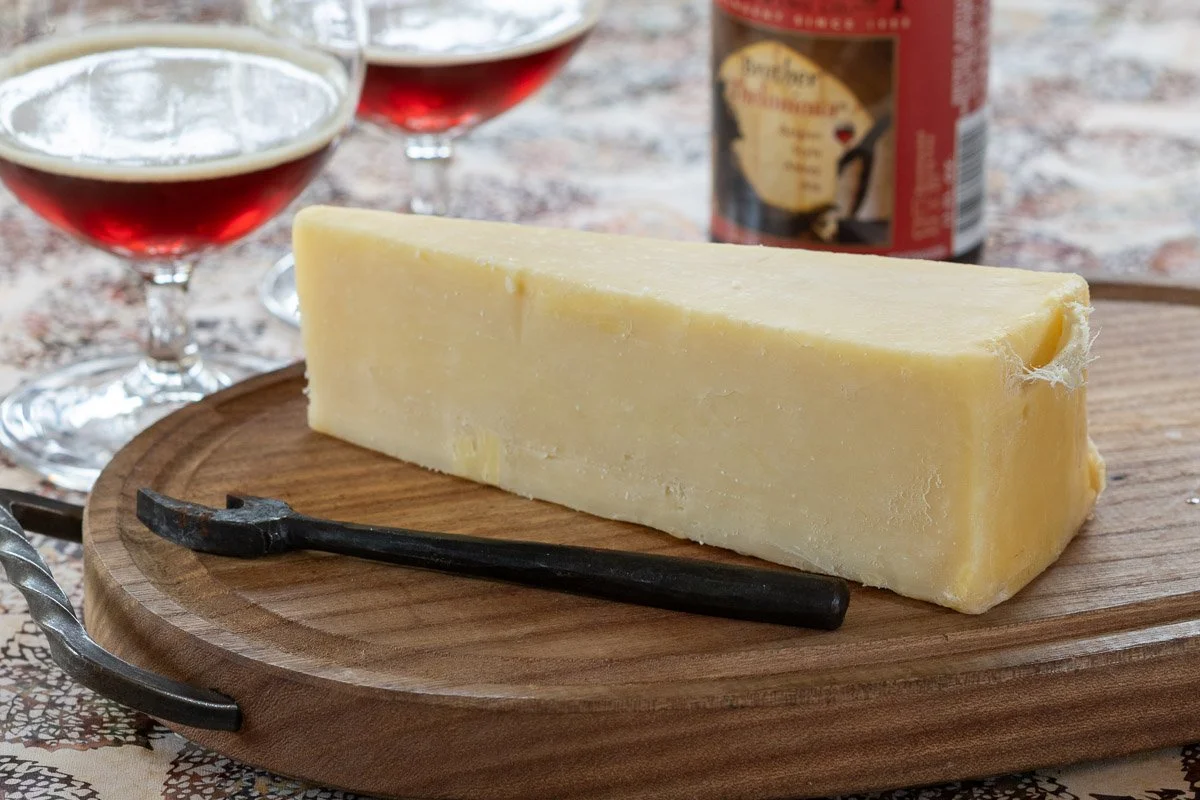
One of the biggest hits in my World Cheese Tour class last week was Deer Creek’s Imperial Buck, a four-year-old bandaged Cheddar from Wisconsin. It was so creamy, so mellow, so well balanced between savory and sweet. My experience with traditional bandaged Cheddars is that they rarely improve after 18 to 24 months. They start to dry out and lose their allure. How did this cheese manage to stay so moist and inviting for so long?
Well, I now know the answer, more or less. An unconventional aging method explains this wheel’s impressive lifespan. Comparing Imperial Buck to a fine clothbound English Cheddar is “apples to oranges,” but we can still admire the qualities that the American maturing method produces.
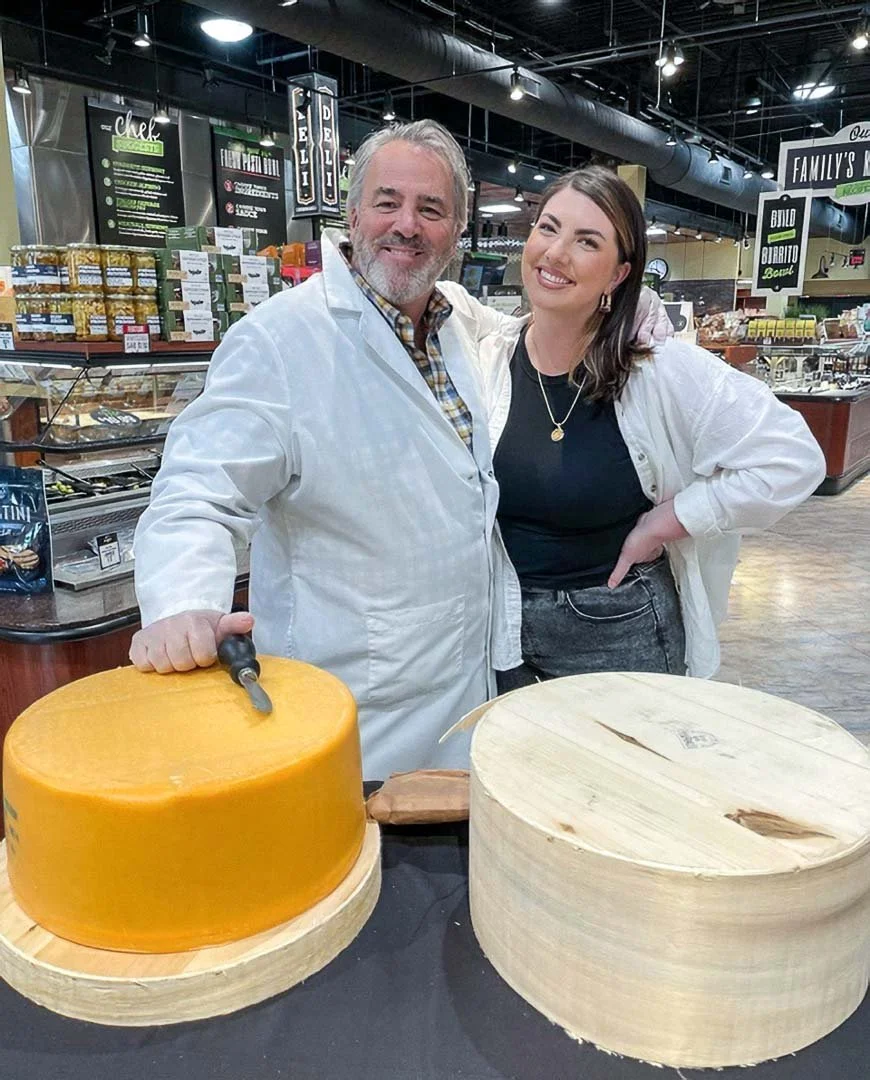
Father-daughter duo: Chris and Sophie Gentine
To be clear, Deer Creek doesn’t make any cheese. Company founder Chris Gentine is a licensed cheese grader, so he knows a good wheel when he tastes one, and he’s a genius marketer. Deer Creek contracts with others to make cheese, and then Gentine determines which batches to release young and which might benefit from extended aging. Kerry Henning, a Wisconsin Master Cheesemaker, made the wheel I served in class last week—a wheel born November 11, 2021.
Until I encountered Imperial Buck, I thought Cheddars were either bandaged (with cheesecloth) and matured with access to air, or they were aged without air in sealed bags. Many connoisseurs would say that aerobic aging yields more complexity, but it’s labor intensive to manage the rind that develops. Rinds have to be monitored and brushed to control mold, and the cheeses have to be regularly flipped.
Bag aging is easier but slower. There’s no rind to fuss over, and no back-breaking flipping. Moisture stays in (and moisture is money). What’s more, vacuum-sealed Cheddars can hang in the cellar for a year, three years, even a decade. They transform at a snail’s pace.
For Imperial Buck, Henning and Gentine chose a hybrid approach that’s more common in Wisconsin than I knew. The 22-pound wheels are wrapped in cheesecloth, then waxed. The wax is more permeable than a bag, but it likewise inhibits mold and rind development and slows moisture loss. Before it goes into the cellar, the waxed wheel is nestled in a poplar box, like a giant hatbox, to preserve humidity.
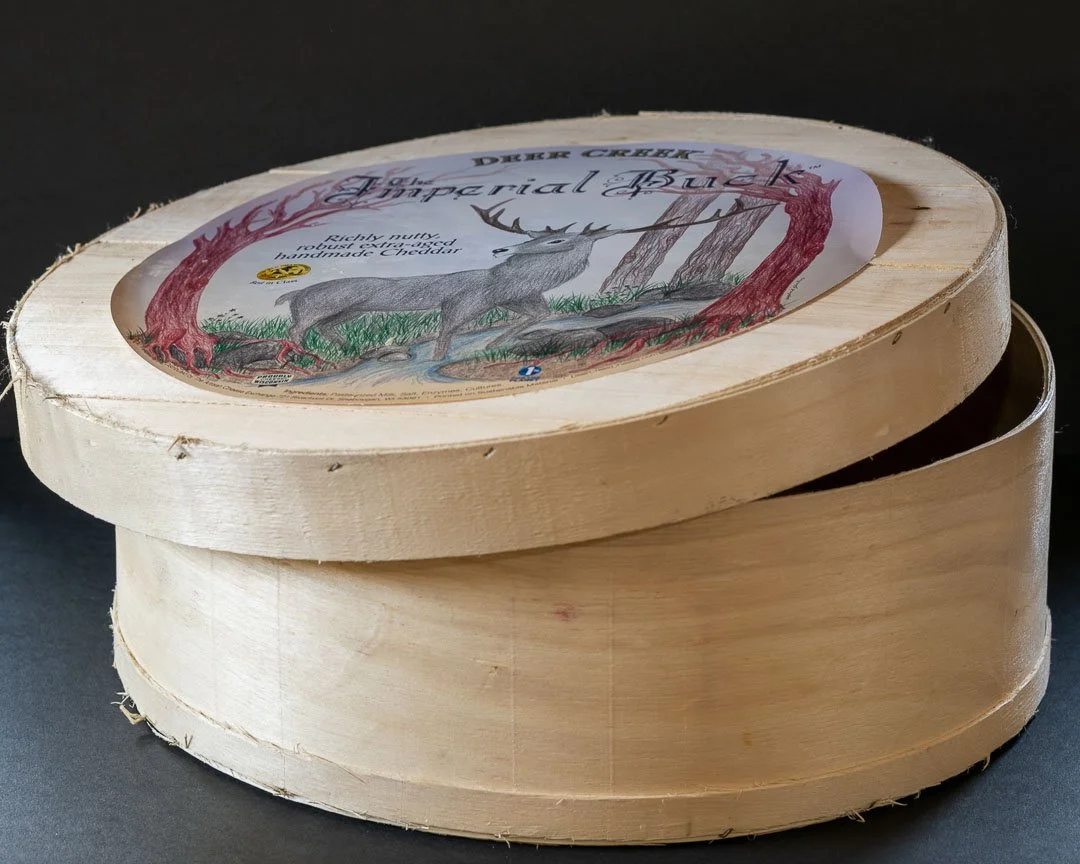
Deer Creek’s Imperial Buck spends 4 to 5 years in a poplar box.
Initially I couldn’t understand why you would wax a bandaged Cheddar. Do you want the air or don’t you?
“Wisconsin Cheddar makers love doing this,” says Gordon Edgar, cheese buyer for San Francisco’s Rainbow Grocery and the author of Cheddar: A Journey to the Heart of America’s Most Iconic Cheese. And he is persuaded that waxing a bandaged Cheddar enables a distinctive flavor trajectory. “I have a 5-year Red Barn on our counter that is also made this way,” says Edgar, “and it absolutely ages differently than a Cryovac Cheddar or a more traditional clothbound like Monty's.
Sophie Gentine, Chris’s daughter and herself a licensed grader, told me that her dad talks about flavor “leapfrogging.” A Cheddar that underwhelms at 24 months may render you speechless two years later. “It’s the weird magic of cheese,” says Sophie. “Those flavors just compress. The butter flavors become more like butterscotch, the caramel becomes more toffee.”
Like many popular American Cheddars, Imperial Buck veers to the sweet side. It is nutty and caramelly, not grassy and tangy, thanks largely to Gentine’s choice of cultures. Let it sit on your tongue to experience its creaminess. A malty brown ale or Belgian-style abbey ale complements its toasty notes. Add some sturdy bread, pickles and hard-cooked eggs for a perfect ploughman’s lunch.
Although igourmet appears to be temporarily out of stock, the online merchant does typically offer it. Ask to be notified when it’s back in stock. It’s also currently available in California at Andrew’s Cheese in Santa Monica and Smallgoods in La Jolla and will soon be available at Sunshine Foods in St. Helena.
