
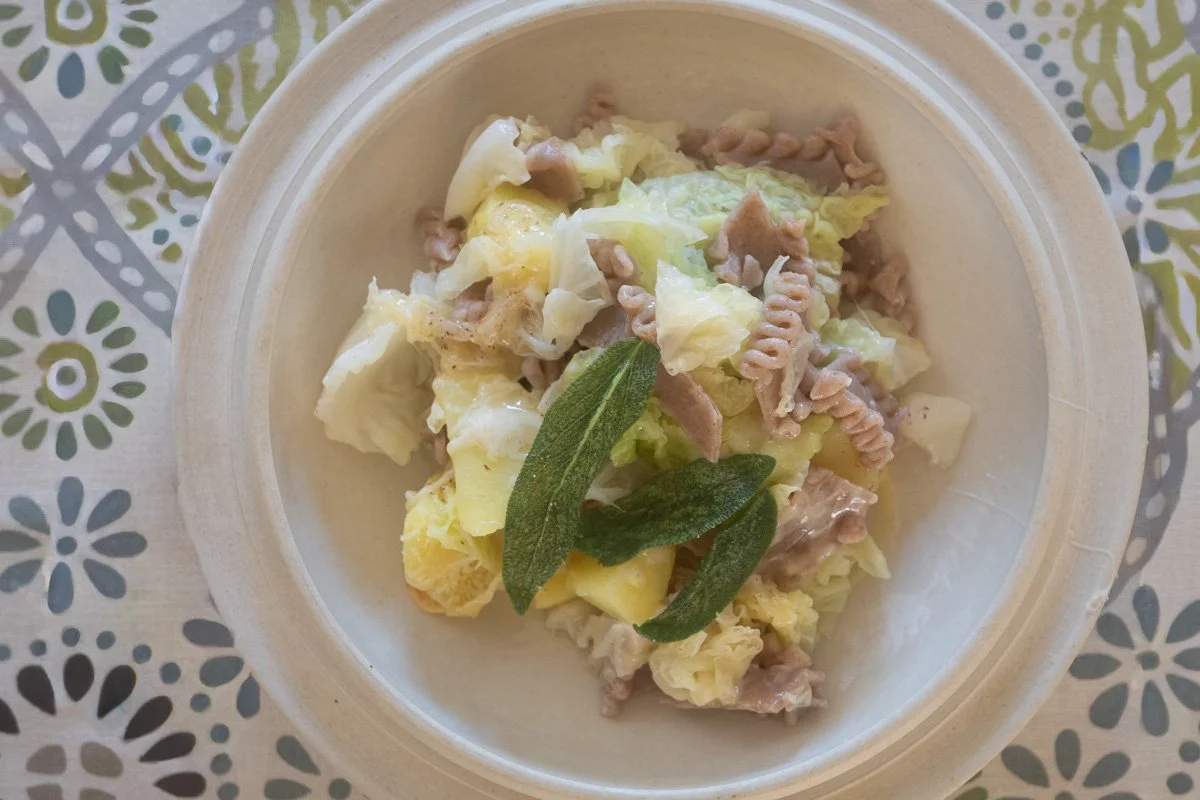
The Winter Olympics gets underway in northern Italy early next month, with many of the snowy sports happening in the Dolomites and the Valtellina. I have been hyper-aware of this for a while, because Pasta Grannies, my favorite YouTube channel, is all over it. To promote the Olympics, the show has been spotlighting nonnas from these mountain regions making the local pasta specialties, such as pizzocheri—a substantial concoction of fresh buckwheat pasta, Savoy cabbage, potatoes and cheese. Lots of cheese.
In the Olympic spirit, I wanted to make pizzocheri (say peetz-OH-care-ee) myself but finding the right flour proved challenging. So—not very Olympian—I cheated. I substituted dried farro pasta and, while I can no longer claim authenticity, I can assure you the outcome does not disappoint.
Italy being Italy, there is of course an association dedicated to promoting pizzocheri and protecting the traditional recipe. Its members would not be happy with my workarounds (farro pasta in place of buckwheat pasta and Fontina Val d’Aosta cheese instead of the local Casera or Bitto).
But my first failed attempt with storebought buckwheat flour made one thing clear: I did not have the right flour.
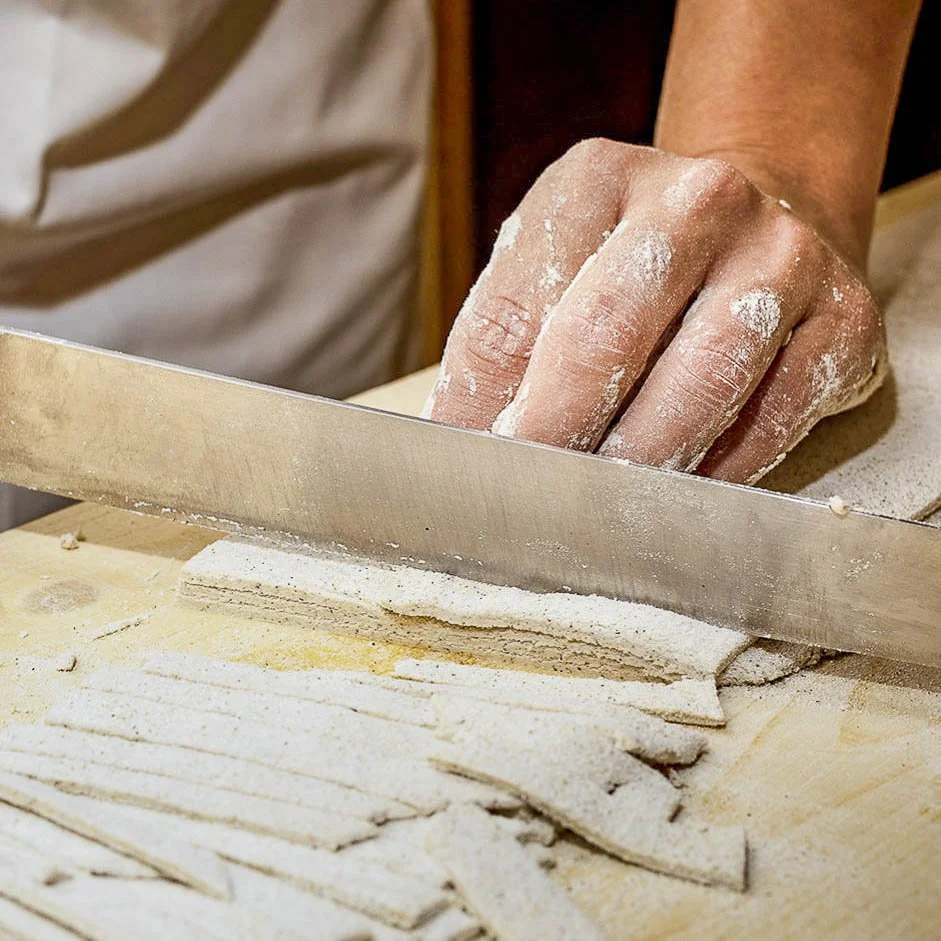
Credit: Accademia del Pizzochero di Teglio
As you can see in the Pasta Grannies video, the ladies from the Accademia del Pizzochero di Teglio use buckwheat flour milled from hulled grain, plus 20 percent all-purpose wheat flour. Just look how pale the noodles are in this image from the Accademia. I could only find dark buckwheat flour milled from whole grain (with the hulls) and I wasn’t happy with my results.
Many good supermarkets now carry Italian farro pasta. My favorite, Rustichelli d’Abruzzo’s pizzichi, have a handmade appearance and a rustic, earthy flavor that match the nature of pizzocheri. But any shape—short or long—will do. If I were using long farro pasta, I might break it in 3-inch lengths to more closely mimic traditional pizzocheri.
Pizzocheri My Way
Pizzocheri al modo mio
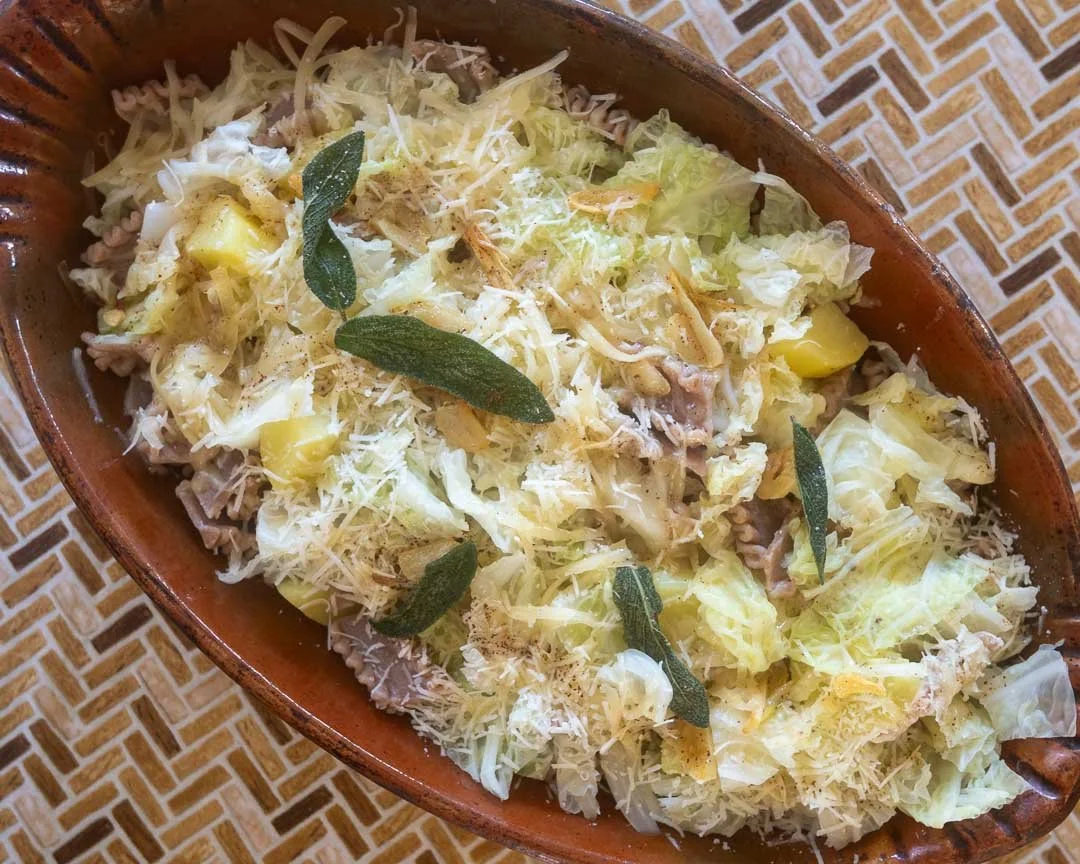
For the pasta, I use Rustichella d’Abruzzo pizzichi di farro, a short, wide shape with ruffled edges. Like handmade buckwheat pizzocheri, they are sturdy and rustic, with an earthy flavor. If you can’t find Fontina Val d’Aosta, look for Cowgirl Creamery’s Wagon Wheel. Don’t stint on the garlic butter or the salt and pepper.
4 ounces (8 tablespoons) unsalted butter, plus more for the serving dish
2 large cloves garlic, thinly sliced
16 large fresh sage leaves
Sea salt and freshly ground black pepper
1 pound Savoy cabbage, cored, torn into bite-size pieces
1 pound Yukon Gold potatoes, peeled, halved (if large) and sliced ½ inch thick
12 ounces dried farro or buckwheat pasta
½ pound Fontina Val d’Aosta, coarsely grated
1/2 cup Parmigiano Reggiano, finely grated
Bring a large pot of well-salted water to a boil over high heat. Butter the bottom and sides of a low-sided ovenproof serving dish and place in a low oven to warm.
Melt the butter in a skillet over medium-low heat. Add the garlic and cook until the garlic is just starting to color and the butter is turning golden. With a slotted spoon, transfer the garlic to a small plate and add the sage leaves to the butter. Cook until the butter stops sizzling—a sign that the moisture in the sage leaves has evaporated—and transfer the sage leaves to a paper towel with tongs. Season with salt. They will crisp as they cool. Return the garlic to the butter and keep warm on low heat.
Add the cabbage to the boiling water and cook until just tender, 4 to 5 minutes. With a slotted strainer, lift the cabbage out and into a sieve to drain. Add the potatoes to the boiling water and cook until they are just tender, about 8 minutes, depending on size. Lift them out with a slotted strainer and put them in the sieve with the cabbage to drain.
Add the pasta to the boiling water and cook until al dente. About 30 seconds before the pasta is done, add the cabbage and potatoes to the pot to reheat. Drain in a sieve or colander.
Working quickly, in the warmed serving dish make a layer of pasta, cabbage and potatoes, using half of the mixture. Season well with salt and pepper. Top with half of the grated Fontina, then make a second layer of pasta, cabbage and potatoes, using the remainder of the mixture. Season well with salt and pepper. Top with the rest of the Fontina and all the Parmigiano Reggiano. Pour the warm garlic butter over all and garnish with the fried sage leaves. Serve immediately in warm bowls.
Serves 4 to 6
