
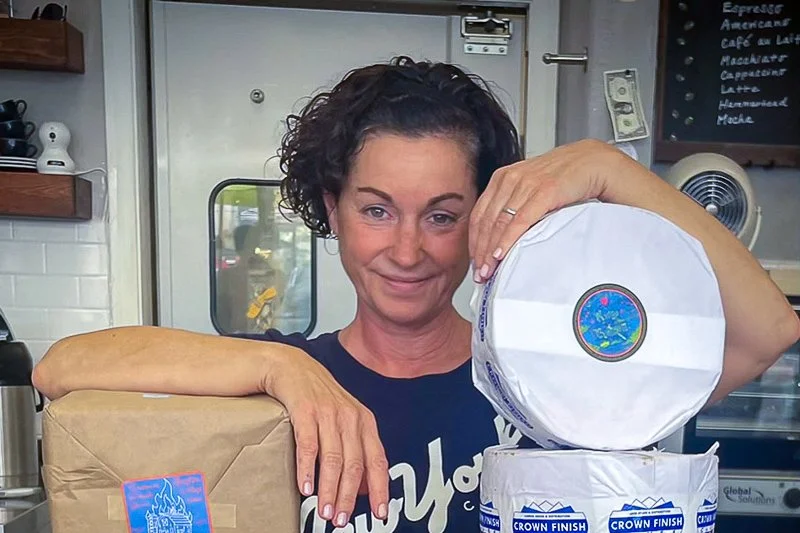
You never need an excuse to eat cheese, but May is a good time to show American-made cheeses some extra love. It’s American Cheese Month—that’s official—so I’ll be shining the spotlight for the next few weeks on some of our nation’s finest. To kick us off, I turned to Jenny Eastwood, who sells exclusively American cheese at Smallgoods Cheese Shop & Café, the business she operates in La Jolla, CA, with her husband, Mike. I’ve been alarmed by some recent developments –shops closing, creameries ceasing production—and wondered if the optimism I’ve long felt about the future of American artisan cheese is still warranted. Eastwood had some blunt and compelling thoughts about that so I’m giving her the floor.
It’s Tough Out There
By Jenny Eastwood, ACS CCP
The American cheese scene is fragile—more than most people realize. Since 2015, we’ve worked exclusively with small-batch American producers: sourcing, showcasing, selling and documenting their work. Our database now includes hundreds of U.S. cheeses—it’s likely one of the most extensive out there. Our café walls are lined with photos of them. Thankfully, many are still around but not all.
When a maker closes, we feel it immediately. Our entire menu is built on American products. When Central Coast Creamery retired, it hit hard. Most of our café/cheese shop’s best sandwiches use their cheeses as foundational elements. We don’t sell Turkey & Cheese sandwiches - we sell Cheese & Turkey sandwiches. And that’s no accident. And we’ve just experienced the same loss again – with Alemar. This isn’t abstract—it’s constant. These aren’t just cheeses in a case to us.
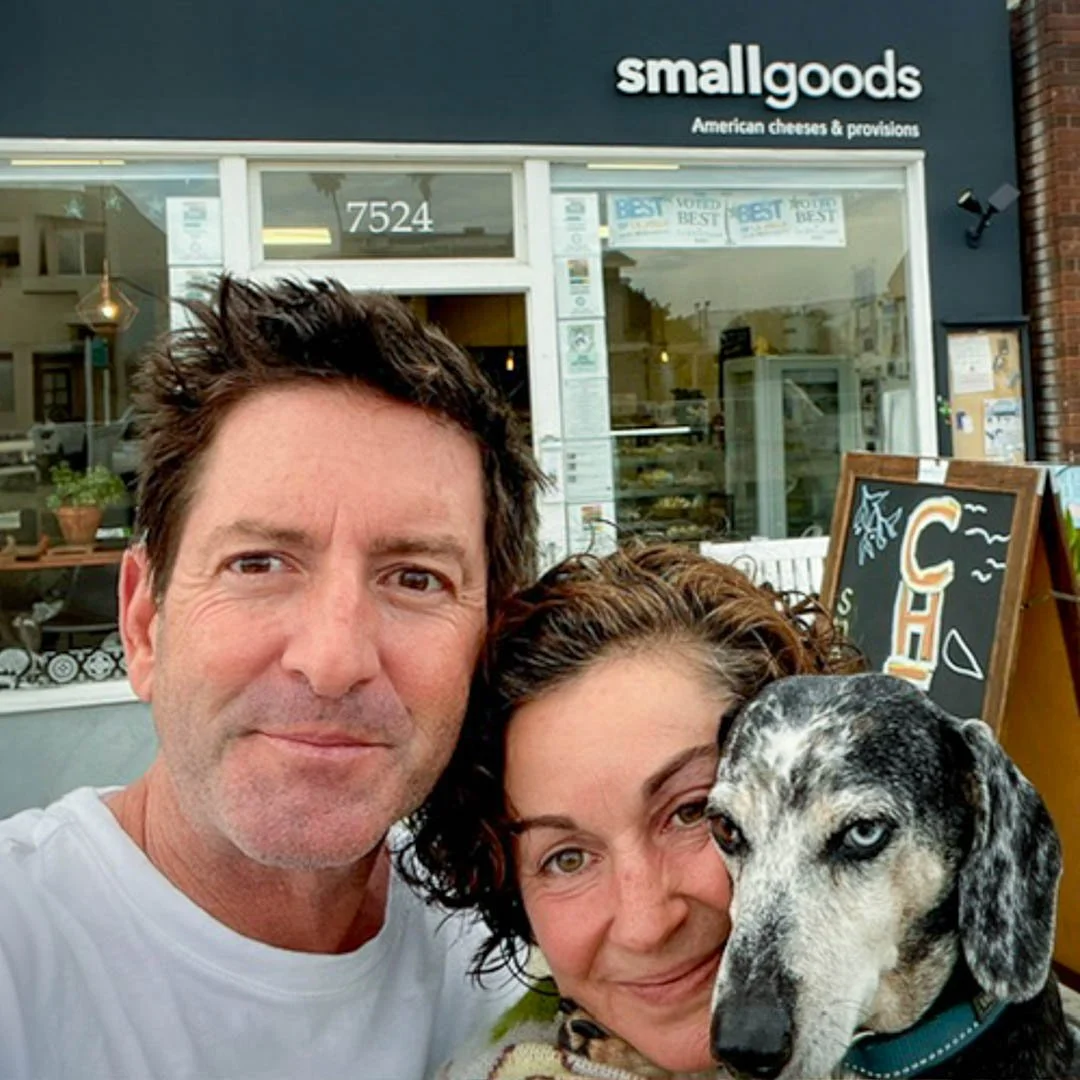
American cheese boosters: Mike and Jenny Eastwood
Specializing in American food adds a unique layer. You have to earn attention, trust and loyalty in a culture that still equates Europe with quality and American products with skepticism. Part of our day is spent undoing that bias—some of it earned, some of it outdated. Supporting American makers—and farming families like the one I come from—isn’t just business. It’s what we set out to do. If shops like ours don’t actively support these producers, who will?
Running an independent cheese shop today means facing challenges that didn’t exist years ago. The uncomfortable truth is that convenience wins. Not quality. Not story.
Online is instant. Supermarkets are easy. Delivery is expected. And price is always in play.
We’re not just competing on product—we’re competing against expectations and ease. A missed parking spot and people move on. Meanwhile, the marketplace keeps expanding but the dollar doesn’t. It fragments—across more brands, more competition, more noise. Small businesses can get lost in it all.
We spent five years building a loyal following in San Diego’s year-round regional farmers markets. Opening a brick-and-mortar was a reality check. Customers didn’t automatically follow. Suddenly, we became less convenient.
So what’s worked for us? Connection. It’s quite possibly the only advantage we have.
Relationships matter. Our core customers—the ones who get what we’re doing—are everything. For new customers, especially younger ones, it’s about experience. Let them taste something real. If they leave with a connection—to the food, the maker, or our judgy old dachshund on the couch—then we'll see them again.
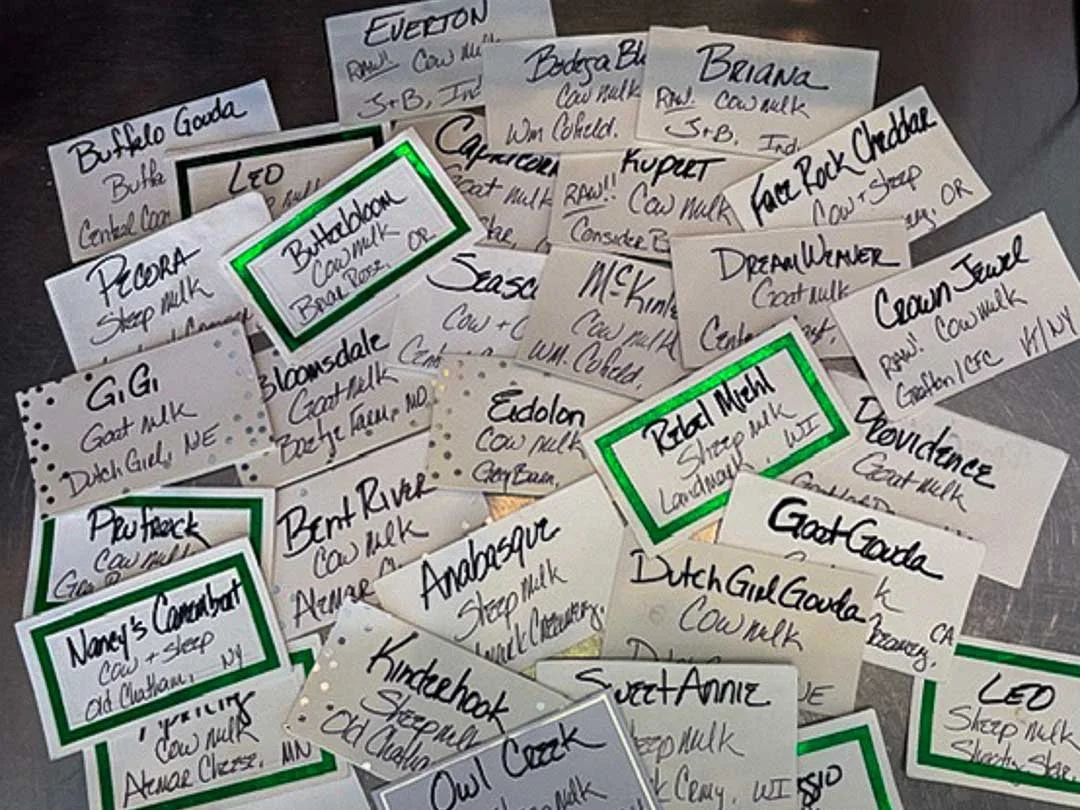
Smallgoods signage: can you spot the cheeses no longer made?
We try to create moments that stick. Sometimes it feels that’s all we have and we always hope it’s enough.
Growth hasn’t meant scaling up. It’s meant narrowing in. Staying deliberate. Earning our place in the neighborhood. Protecting a niche that doesn’t tolerate excess. We’re not chasing quantity over quality. Our cheese case is intentionally small and we rotate often. It lets us highlight more makers and gives people a reason to see what’s new and explore their country’s offerings.
Support your local makers and your local shops. Support your Cheese Guilds. Show up to the festivals they host – they matter and they provide great learning opportunities that keep us focused and inspired.
We’re honest with our customers when they ask how things are going. The truth stings a bit—it’s tough out here. Where they choose to spend their money matters. Independent shops and the producers behind them don’t make it on good intentions. With independent shops, you’re not only buying for consumption. You’re buying for preservation.
