
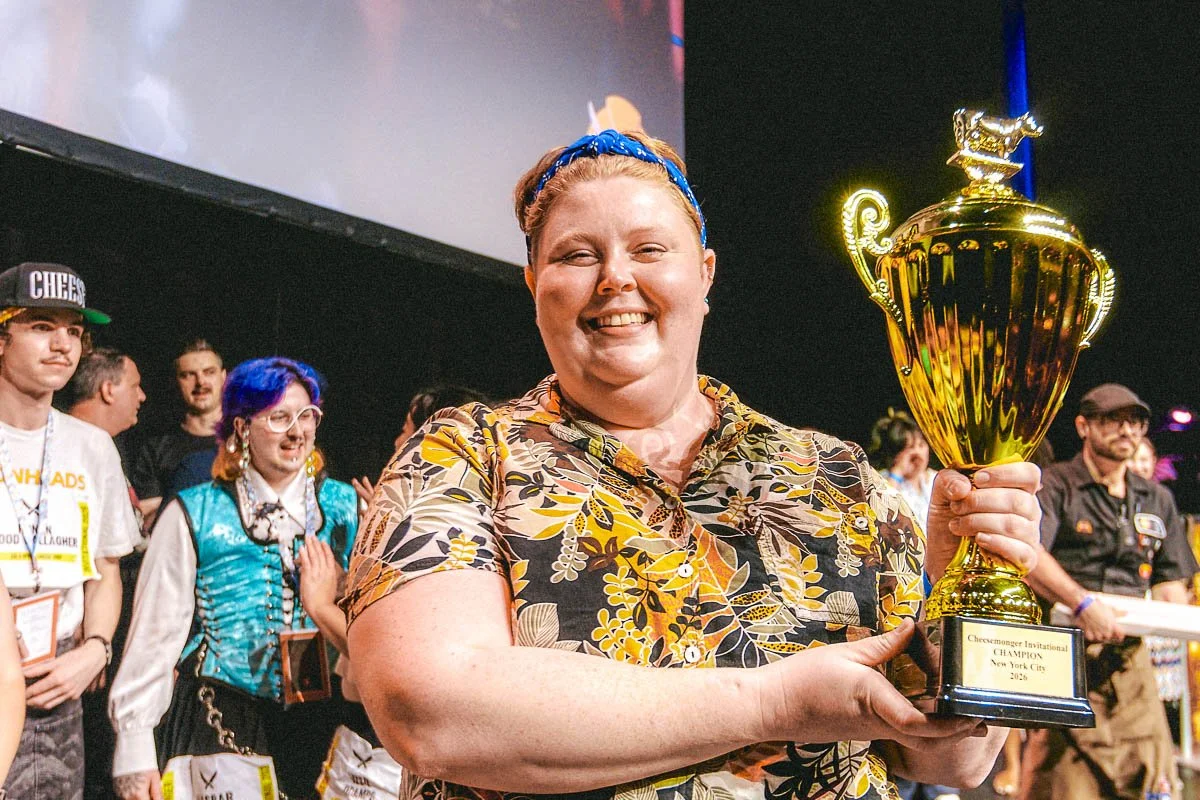
She slices, she dices, she cuts and wraps. She pairs to perfection, blind-tastes with aplomb and has read The Oxford Companion to Cheese from A to G (because, really, who could finish it?) That’s why 28-year-old Hanna Lee (above) is the newest winner of the Cheesemonger Invitational, a wild and wacky competition that can rocket the victor to cheese-world fame. In this interview for Planet Cheese, Lee explains how she prevailed, shares six cheeses she’s loving right now and tackles the question I’m asked most often: Can you eat the rind?
Lee’s animal-science studies in college piqued her interest in dairy farming, a slippery slope to cheesemaking and cheese. She has interned at the renowned Uplands Cheese in Wisconsin, makers of Pleasant Ridge Reserve; worked behind the counter at Whole Foods; and deepened her cheese knowledge with Cheese State University and Academy of Cheese courses. And, obviously, she likes to compete. This was Lee’s third Cheesemonger Invitational. She placed second last year before traveling to the U.K. to vie for—and win—the title of International Young Cheesemonger of the Year. She currently works at the Mouse Hole Cheese Shop in Albuquerque, one of only two independent cheese merchants in New Mexico.
I’ve edited our conversation for brevity and clarity.
What is it about cheese that grabbed you?
I’ve been interested in food since I was a kid and loved to watch cooking challenges on TV. The idea that you can manipulate ingredients into all these different flavors is something that has always captured my attention. Apart from flavor-added cheeses, all cheese has the same four ingredients: milk, rennet, salt and cultures. You see fresh mozzarella next to three-year-old Gouda, and you're like, these are not the same cheeses, but at the core of it, they are. Seeing how every cheesemaker chooses to manipulate those ingredients is really what has kept me in it.
You’ve competed at Cheesemonger Invitational before but what was your training regimen this time?
I did three cheese competitions last year, so I’d built up this base of knowledge. I read through American Farmstead Cheese and The Oxford Companion to Cheese.
Like cover to cover? You read that?
No, I tried. It's so dense. I probably read through G and then started flipping.
Tell me about your Perfect Bite (100 portions of an original bite-size creation using an assigned cheese).
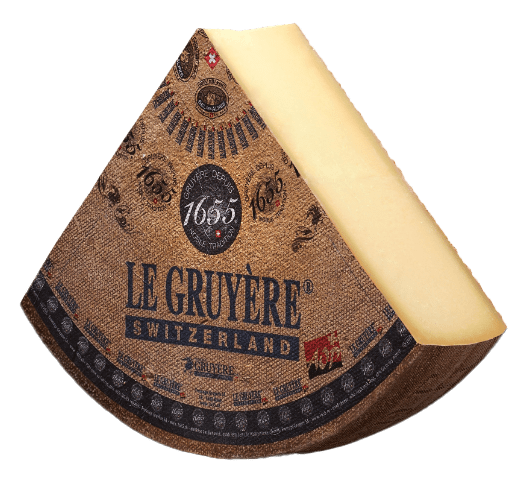
Gruyère for the win: Lee’s Perfect Bite propelled her to victory
My cheese was Gruyère 1655, a lovely cheese. When I got my assignment, I wrote down all my ideas, and then I’m like, can I actually execute this? I made a caramel sauce with orange juice and miso. So there was acid from the orange juice and salty umami from the miso. I used a melon baller to scoop out the Gruyère and filled the center with caramel sauce and put a Rold Gold mini pretzel on top.
Wow, a lot going on there.
Usually, my first idea is the best. It’s about taking my initial instincts and distilling them into a composed presentation.
Off the cuff, what three cheeses would you choose for an All-American cheese plate right now?
I've really been loving Cumberland from Sequatchie Cove. It's tomme style, very light and milky and earthy. For a soft cheese, Shabby Shoe from Blakesville Creamery. It has a bright, lemony cakiness and it has been really appealing recently. In New York I tasted Murray’s Stockinghall Cheddar—amazing cheese.
And for an international plate?
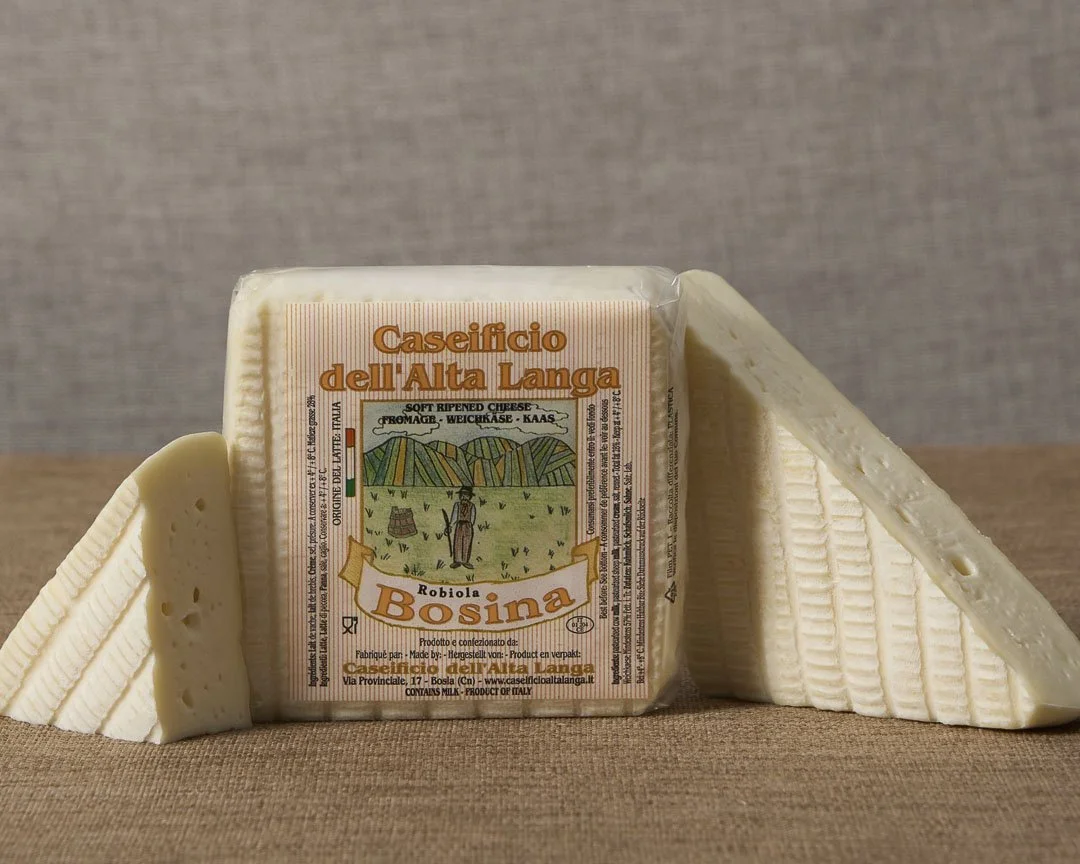
Lee favorite: Italian mixed-milk Bosina
One cheese that I always recommend to people is Robiola Bosina. It’s incredible in summer with stone fruit. And then the Tomme de Chèvre from Onetik—similar to the Cumberland but more mushroomy and brighter because of the goat milk. We did Etxegarai for our cheese club last month at the store. It’s a smoked Basque sheep cheese and really tasty.
What cheese do you think is underappreciated?
It’s not really a hard sell, but Prairie Breeze from Milton Creamery could be seen as a commodity cheese. It’s super approachable, at a nice price point, and it’s got that sweet pineapple, caramelized flavor. In cheesemongering, there's a sort of bell curve. When you start out and don't know anything, every cheese is incredible. And then when you've been around for a couple of years, you’re like, “I only want specialty products, none of that mass-produced stuff.” But if you stick around, you start to see the merit in those 40-pound blocks and why they're so important, because they do get people interested in more specialty cheese.
I’m curious how you deal with questions that I get all the time from consumers, like “How long will this last?”
We sell all of our cheeses in Formaticum paper at the shop, which definitely helps extend the life. I think the true answer is to buy the amount of cheese you need for that day. Cheese is always going to be best on the day you get it. And then you get to come in more often and see what's new.
“Can I eat the rind?”
Absolutely, unless it’s wax or cloth. But there are some cheeses where I don't recommend it. Like, Cabra al Romero, rubbed in rosemary. It’s a little pokey. Or if it’s very strong and will impact the flavor of the cheese. I don’t personally eat the rind on Gruyère or Comté but some people love it. If you’re curious about a rind, taste it. You can eat it just once and then never again. There’s no cheese police saying, “You didn’t eat your rind.”
“There’s mold on my cheese. Throw it away?”
As long as it's not a scary color, like black or pink on the face of the cheese. If it's fluffy white or blue, it's just the rind trying to colonize the rest of the cheese. Just scrape it off.
Last question: “Bread or crackers?”
My personal thought is: none. I like to experience the cheese just as it is.
