
My Sungold tomato plant is out of control. One of these years, I will tally the number of pounds I harvest from one vine but I’m certain the figure will be three digits. If asked to rate Sungold on a 100-point scale, I would probably give it a 99, deducting a point for its refusal to know the meaning of “Enough already!” Speaking of 100-point scales, I read a provocative essay recently suggesting that cheese should be rated that way, as wine often is. The writer argued that scores would help consumers who are flummoxed at the cheese counter, in the same way that wine ratings guide her to the best stuff. I have some thoughts about this idea. Please use the Comments section at the end of the post to weigh in with yours.
Felice Thorpe’s recent opinion piece in Culture magazine caught my eye and was a thought-provoking read. Thorpe has worked in cheese for many years on the sales and marketing side, and she’s a lively writer. But I disagree with her theory that what works for wine—scoring it with points—would be helpful for cheese. Please, let’s not go there.
Fine wine and artisan cheese are nothing alike, apart from appealing to a roughly similar demographic. A bottle of 2024 Château Fill-in-the-Blank is the same everywhere, barring some mishap in transport. When it’s released and evaluated by critics in New York and San Francisco, they’re all tasting the same wine. When you buy it in a store—assuming years haven’t passed—you are tasting what they tasted.
If I find a wedge of Jasper Hill’s Moses Sleeper in a shop with a sticker that says “99 points from Culture magazine” but the wedge is overripe and has been in the same plastic wrap for two weeks, it’s going to be a lousy piece of cheese. If I purchase La Tur at two different cheese counters on the same day, one sample might be perfection and the other long past its prime.
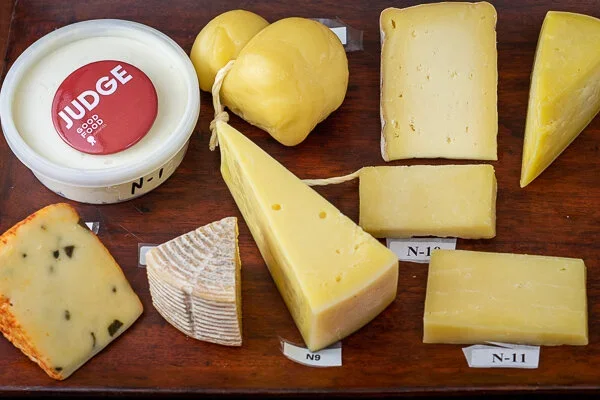
Keeping score: Should cheese get points?
Wine changes by vintage but cheese changes by season, even by day. Would summer Beaufort and winter Beaufort have the same score? They are hardly the same cheese. Would Parmigiano Reggiano have one score, no matter whether it’s one year old or three?
And here’s another reason to oppose this idea: It undermines the knowledge of the cheesemonger. Why study so hard to become a Certified Cheese Professional if customers are just going to seek out the cheeses with the highest scores?
Many years ago, when my winemaker husband was between jobs, he worked the Christmas season in a San Francisco wine store. I remember how frustrated he was with customers who came into the shop with a critic’s newsletter in hand and wanted only wines rated highly by the critic. They had zero interest in the expertise of my husband or the knowledgeable shop owner.
I don’t trust a wine critic to know my taste, and I wouldn’t trust anybody but the monger behind the counter to know how a particular cheese was tasting that day. To me, the joy of cheese is in the journey—trying new-to-you cheeses, engaging with mongers and then deciding for yourself what you like. Let me know what you think in the Comments section below.
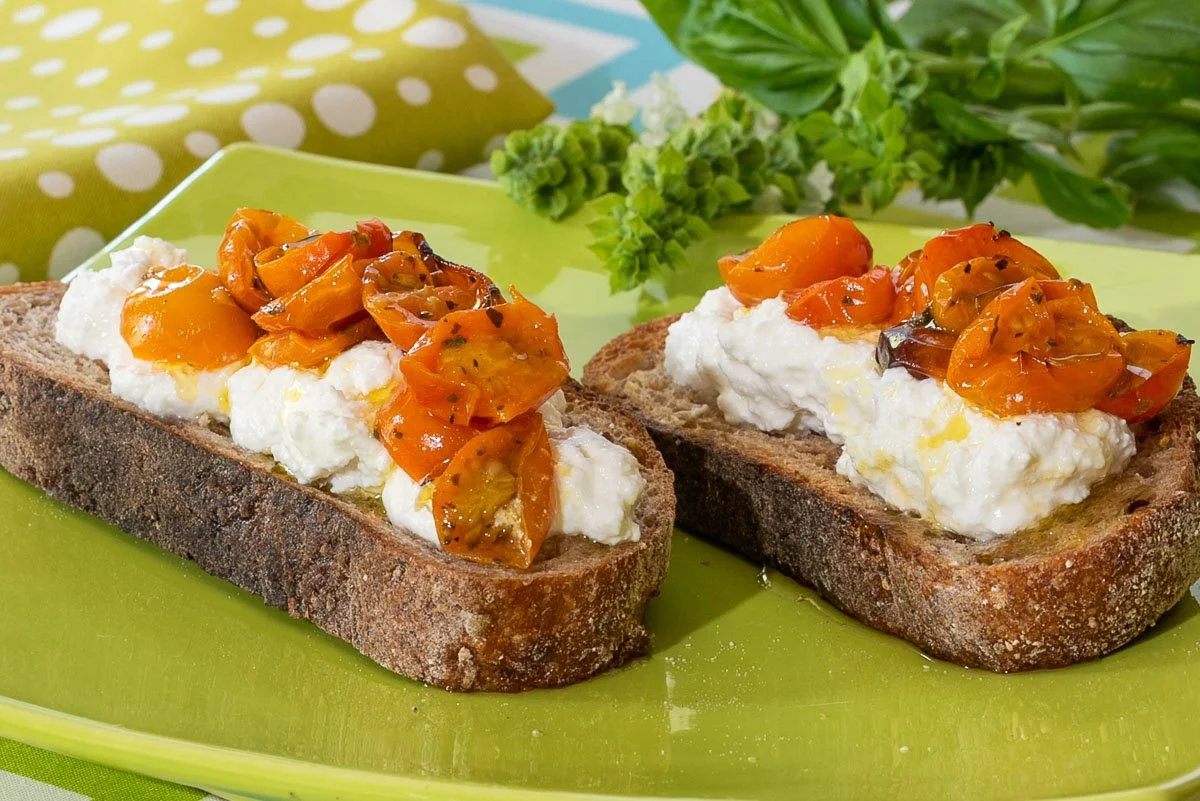
Bruschetta with Roasted Sungolds and Ricotta
You can use any type of cherry tomato, but I’m drowning in Sungolds. I roast a lot of them at one time and keep them in the fridge for quick lunches on toast or on Trader Joe’s Seeds & Grains Crispbread.
1 pound Sungold tomatoes or other cherry tomatoes, halved
1 tablespoon extra virgin olive oil
1 teaspoon dried oregano
Kosher or sea salt
Toasted bread or crisp flatbread
Ricotta, Snøfrisk or other fresh spreadable cheese
Coarse sea salt
Fresh basil leaves, optional
Preheat the oven to 400ºF. Line a large rimmed baking sheet with parchment. Put the halved tomatoes on the parchment, drizzle with olive oil and crumble the oregano over them. Season generously with salt, then toss gently with your hands to coat the tomatoes evenly with the oil and seasonings. Rearrange them into a single layer. It’s fine if they are touching and it doesn’t matter if the cut side is up or down, but try to keep them on the parchment to minimize cleanup.
Bake for 20 minutes. The tomatoes should be soft and starting to collapse. If your oven has a convection fan, turn it on and continue roasting until the tomatoes start to brown on the edges (a sign that they are caramelizing), 5 minutes or so. If you don’t have a convection oven, raise the oven temperature to 425ºF and continue roasting until you see a bit of caramelization, about 10 minutes longer. Let the tomatoes cool on the tray until just warm.
Spread the toasts with ricotta, using as much as you like. Top with some of the roasted tomatoes and a sprinkle of coarse salt. Garnish with torn basil, if desired. Serve immediately.
