
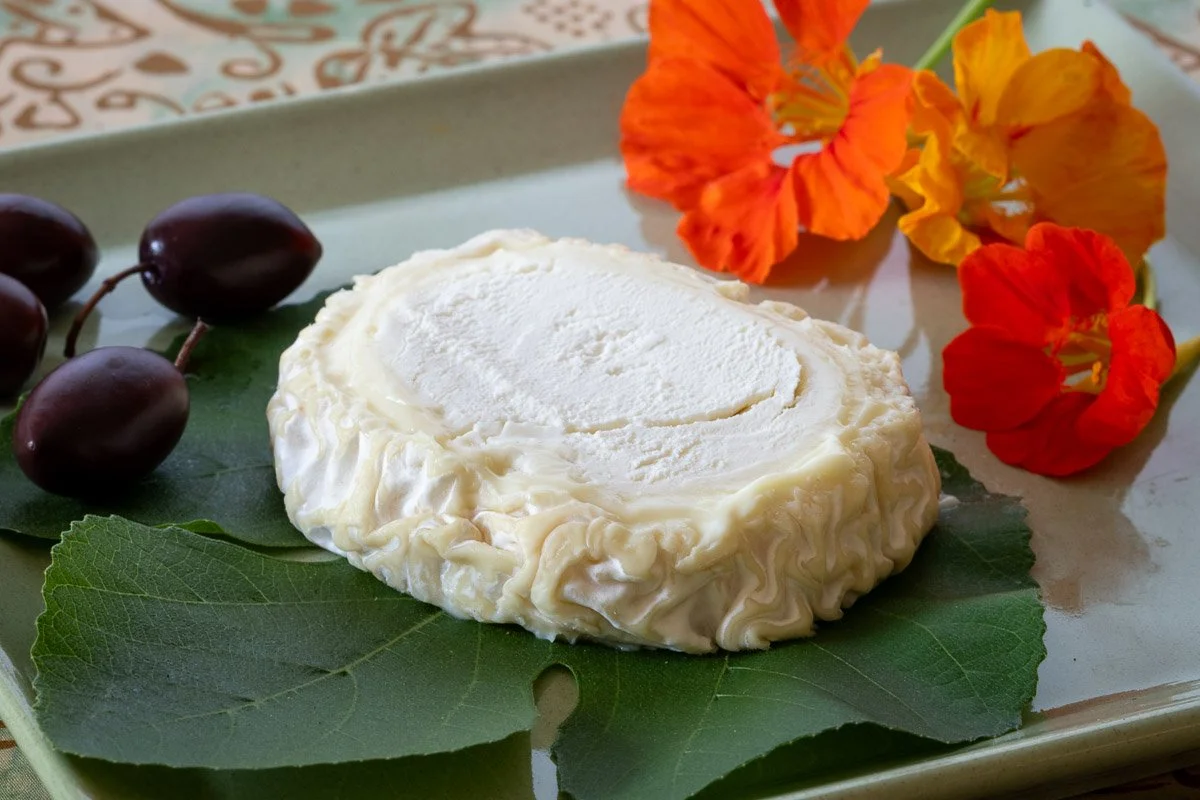
The notion that cheeses have seasons is less valid than it used to be, but springtime still says goat cheese to me. On small French farms run the traditional way, goats give birth in early spring. Once the kids are weaned, there’s abundant milk for cheese—for all those delicate fresh chèvres and, a few weeks later, lightly aged creations like the one pictured above. Breeding advances and sophisticated aging rooms have altered this pattern, but I still associate the warming weather with creamy, tangy goat cheese…
Read moreOops. Missed One!
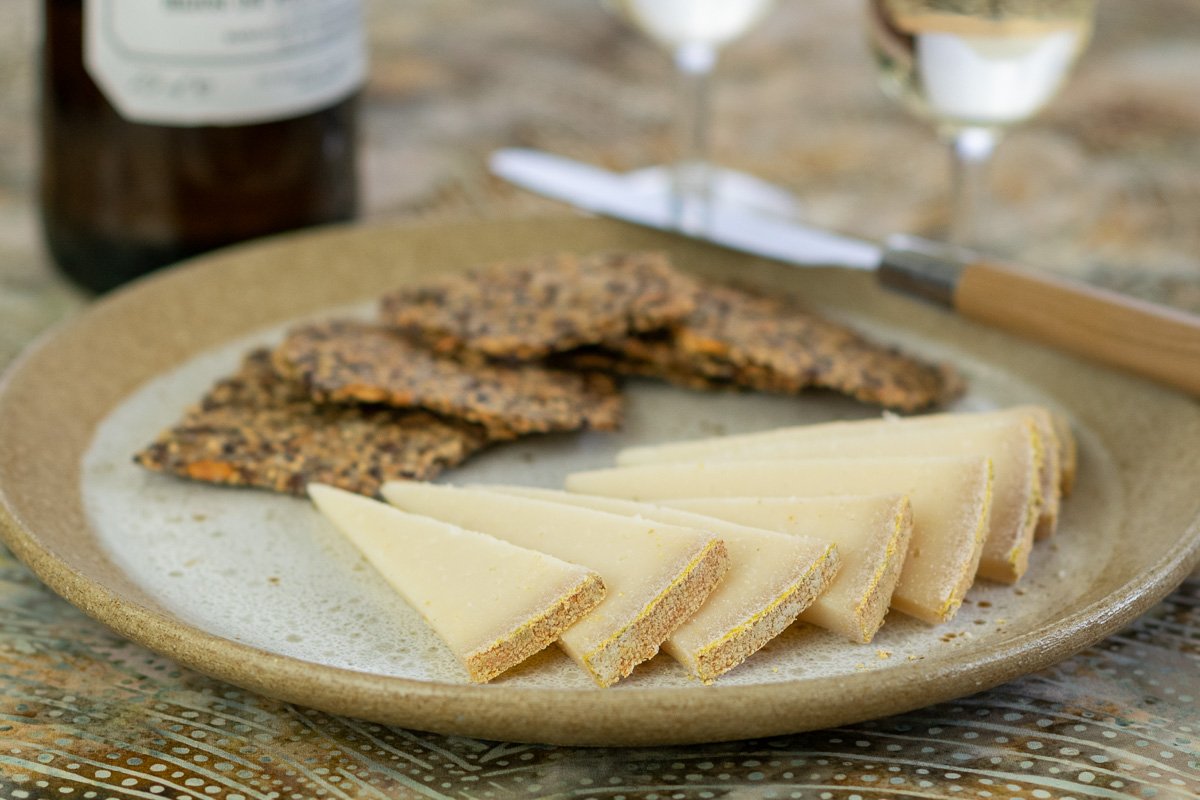
Sometimes it seems like my brain is at capacity. If a new cheese name goes in, another one gets pushed out. In last week’s post about great French Basque cheeses, I inadvertently omitted the newcomer that got me thinking about Pyrenees cheese in the first place. Former cheesemonger Steve Jones alerted me to Tomme per Diou, and there aren’t many cheese people I trust more. I can’t wait to share this raw-milk wheel in my classes (which reminds me: the 2024 World Cheese Tour class schedule is online) and to see more retailers stocking it.
Read moreHead of the Class

Whatever they are doing at Fromagerie P. Jacquin to make this gorgeous, glorious goat cheese, I wish they’d reveal it. Is it the Loire Valley microclimate or simply French savoir-faire? Maybe it’s the expertise that comes from making the same cheeses for 60 years. Whatever, this chèvre has it all: good looks, luscious texture, big mushroomy aroma. To be honest, I’m often disappointed by goat cheeses in this style—they can be chalky or dense and lacking in scent—but this beauty is a pure delight.
Read moreStar Power

This little French beauty has a charming name and a touching back story. But more important, it’s delightful and just right for warm-weather cheese boards. Add a leafy green salad with lots of chopped fresh chives, a baguette and a bottle of Sancerre. Acclaimed affineur Hervé Mons had a hand in this cheese’s creation, so you know it’s sublime.
Read more
Quisque iaculis facilisis lacinia. Mauris euismod pellentesque tellus sit amet mollis.